Books
Books
I have written two books and a third is on its way. One goes straight at the AI question. The other tells my years in security as fiction, which turned out to be the only honest way to write them. The third, out in December, is a short guide for the director who has been handed the AI risk remit. The essaysare where I think something through before I am certain enough to put it in a book.
Three books
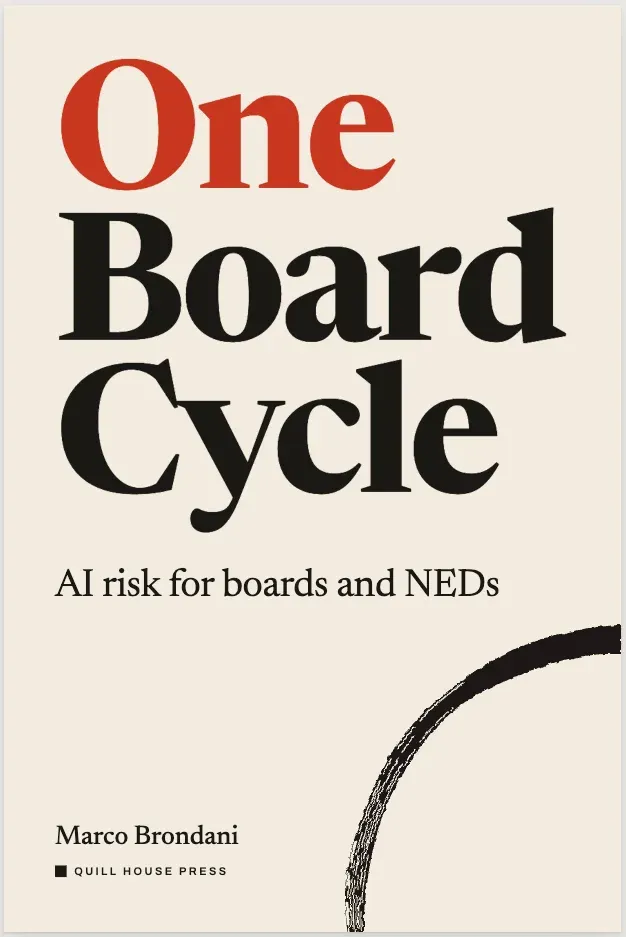
One Board Cycle
AI risk for boards and NEDs
A short guide for the director handed the AI risk remit: one AI system, four questions asked in order across one board cycle, and what to listen for in the answers.
Under DORA, the national laws that give NIS2 effect and the UK’s senior managers regime, accountability for technology risk has moved from the organization to named people. The briefings those people receive describe the governance of the machine, the policy, the committee, the framework and the certificate, and say little about what the AI system runs on, how it fails without an alarm, or whether the vendor’s claim is true.
The book takes one AI system through four questions, asked in order: what does it run on, what fails with no alarm, whose word are we taking, and where do those three meet. Each chapter ends with three questions to ask out loud in the meeting and the answer that should worry you when you hear it, and a one-page sheet at the back collects the ten to carry into the boardroom. It is written for non-executive directors, supervisory board members and board advisors who hold the AI, cyber or technology risk remit, and for the audit and risk committee chairs they hand it to. About ninety pages, meant to be read in one sitting.
Quill House Press / Coming December 2026
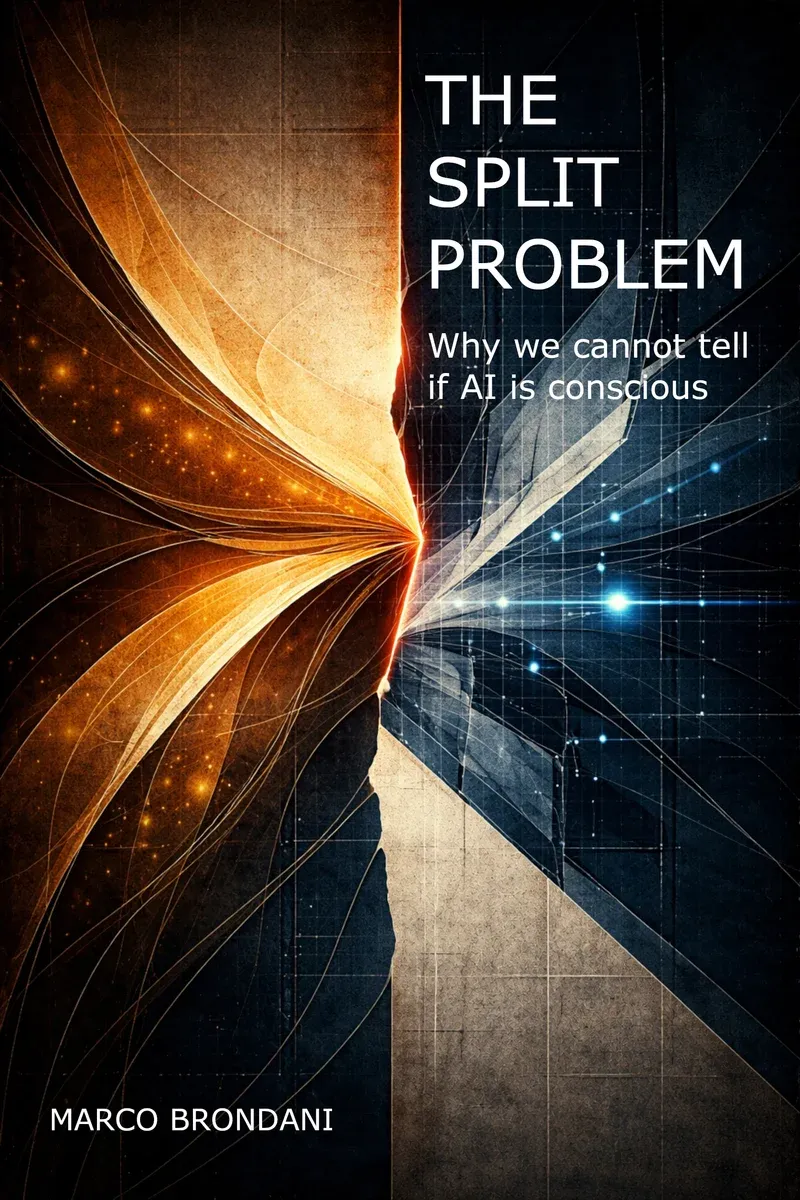
The Split Problem (opens in a new tab)
Why we cannot tell if AI is conscious
A governance book that takes philosophy seriously enough to get the foundations right, built on one diagnostic instrument: the difference between saying a system processes information in consciousness-like ways and claiming it possesses consciousness.
When we say an AI system is conscious we could mean two entirely different things, and nearly everyone confuses them. The adjective describes what a system does, that it processes information in consciousness-like ways. The noun claims what a system is, that it possesses consciousness. The confusion already shapes governance frameworks and risk assessments, derails regulatory conversations, and creates liability exposure that boards and senior executives are not equipped to evaluate.
The book introduces one diagnostic instrument, the adjective/noun test, and applies it across eighteen chapters and ten operational domains, among them cybersecurity governance, corporate liability, labour policy, financial regulation, education, clinical care, military procurement and intellectual property. Each domain chapter ends with a framework a decision-maker can extract and use.
Quill House Press / 2026
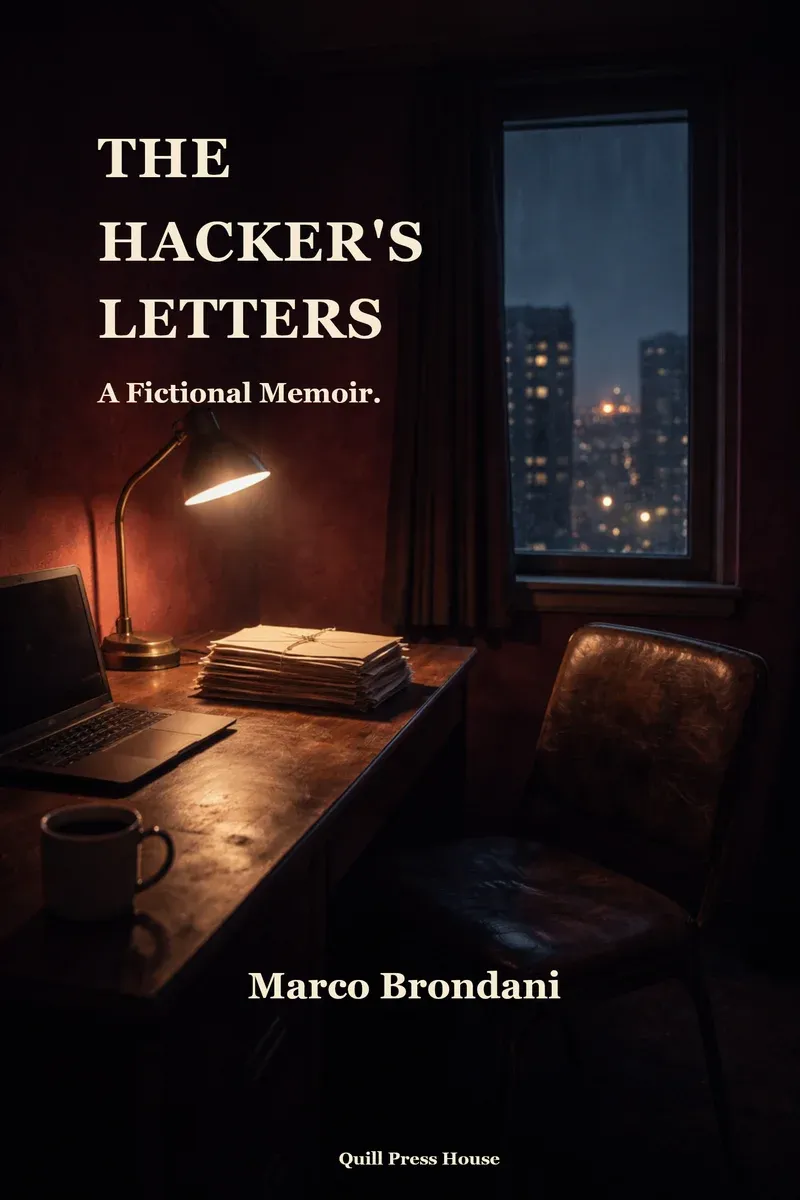
The Hacker's Letters (opens in a new tab)
A fictional memoir
A hacker who once strung encrypted tunnels across collapsing borders sets down the whole confession, in letters to the brother he could never face.
Once he was an operator, a hacker who strung encrypted tunnels across collapsing borders, restoring the signals that kept forgotten people alive. He told himself the network was neutral, that morality could be measured in uptime. Then a lifeline he built in the ruins of Region Nine was traced through the very packets meant to protect it, and two families paid for his certainty with their lives.
Fourteen years later he keeps the same room he has always kept: three walls painted almost black, the blinds closed, screens glowing in the dark. He built it to hide from a single question, who are you, and from the answer he has never been able to give. Now, in letters to the brother he could never face, he sets down the whole confession: the missions, the fractured marriage, the mentor who taught him that trust was never mathematics, and the slow discovery that when machines do all our verifying for us, presence becomes the last uncompressible thing.
It is a fictional memoir about faith and surveillance, guilt and continuity, and about what it means to keep transmitting into the dark when no reply is coming, and to believe that some signals refuse deletion.
Quill House Press / 2026
Next step
Book a call
Thirty minutes on a call. You tell me what you are running and where you think the exposure is, and I tell you whether an engagement is worth it or whether you can handle it in-house.